

For many institutions, the move from traditional static textbooks to Open Educational Resources (OER) represents an exciting opportunity: greater access, reduced cost barriers, more flexibility and stronger alignment with values of open access, equity, and innovation. Librarians and faculty already recognize the potential and with the right approach, getting started can be not only manageable but genuinely energizing.
In this guide, we share practical, encouraging strategies inspired by our work with partner institutions and the real-life methods that have helped them succeed. Whether you’re preparing for a campus-wide initiative or exploring a single course redesign, this roadmap will help you move forward with confidence. Sylla is more than a technology platform that can fast-track your OER strategy, we take a consultative approach and guide our partners through every step for maximum impact.
Embracing open education is a natural extension of an institution’s commitment to creating and sharing knowledge
These initiatives support core institutional values such as:
When your institution offers hundreds of courses, deciding where to begin can feel overwhelming. This is where Sylla can help.
At the start of an implementation, we can analyse reading list data, bookstore or course catalogue data to identify key opportunities. Our algorithm matches essential readings with OER alternatives and generates a 360° overview of which departments, publishers, and courses are most suitable for transitioning to OER.
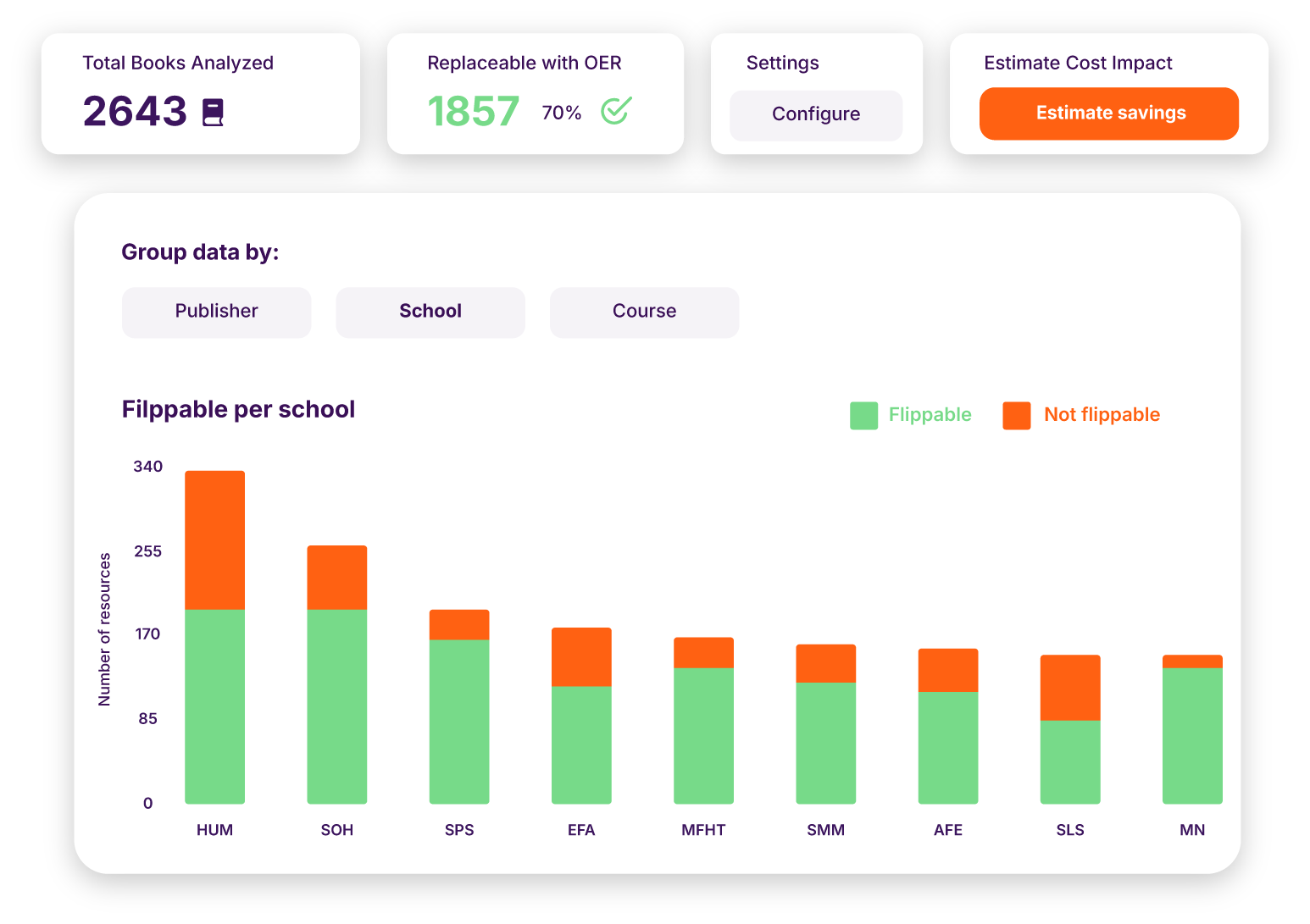
Some subject areas have a rich pool of OER content; others can be more challenging, especially when regional context matters or when the reading list includes copyrighted fiction.
This process creates a data-informed roadmap that makes next steps clear and achievable.
With a clear mission and a shortlist of promising courses, you now have a practical, energizing starting point to target the low hanging fruit. We provide a community adoption list for which courses and closed resources others have already switched to OER successfully.
Next we recommend selecting 5–10 courses for your first OER rollout. Prioritize courses that:
This small, focused approach generates quick successes that ripple across campus. These early wins become stories to celebrate, demonstrating what’s possible and building momentum for wider adoption.
The OER movement is rapidly gaining momentum, so it’s important to remember that you’re not alone on this journey. There are numerous inspiring organisations and forums where you can share ideas, learn from others - and get started.
OER associations
Conferences
Online communities
As Sylla grows, we are committed to fostering this spirit of collaboration by celebrating OER success stories, supporting courses that transition away from traditional textbooks, and helping communities come together to create new OER where gaps exist.
If you’d like to learn more about how to start or accelerate your OER efforts and where Sylla can help, please get in touch or schedule a demo.


.svg)
